
Labour: party of the posh
Only former private school pupils come out swinging for Labour

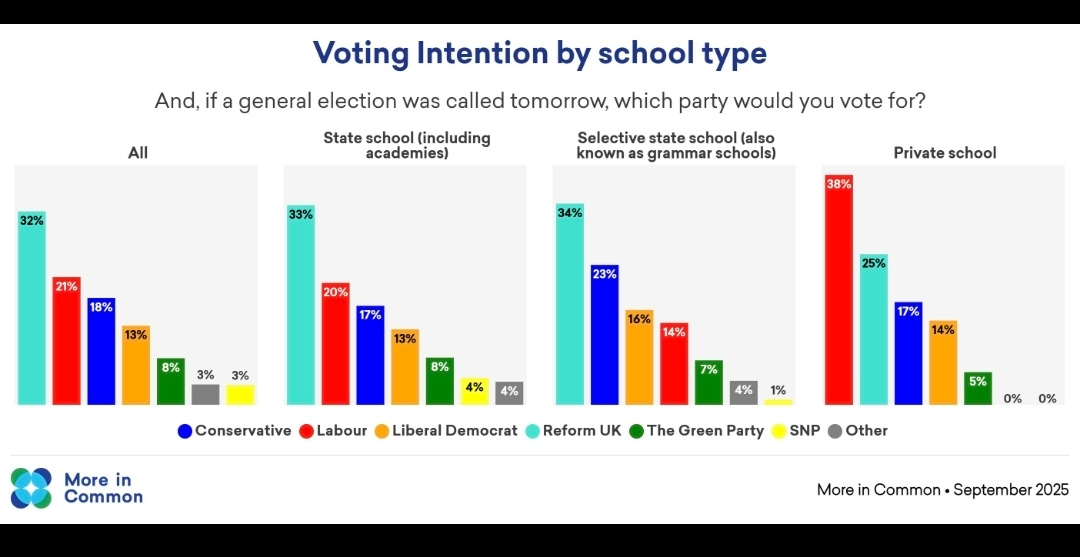
A new survey, conducted by More in Common, makes clear the seismic swing towards Reform UK. When asked how they would vote if a general election were called tomorrow, 32 per cent of those polled opted for Reform. This represents a huge lead over both Labour (on 21 per cent) and the Conservatives (18 per cent). Just 5 per cent separates the Tories and the Liberal Democrats (polling 13 per cent).
What can we take from this? Certainly, it seems unlikely that we will return to two-party politics anytime soon. Reform has blown apart everything that once seemed so stable about the British electoral system. It’s not just that people want change in general; they want an alternative to the ‘uni-party’ consensus.
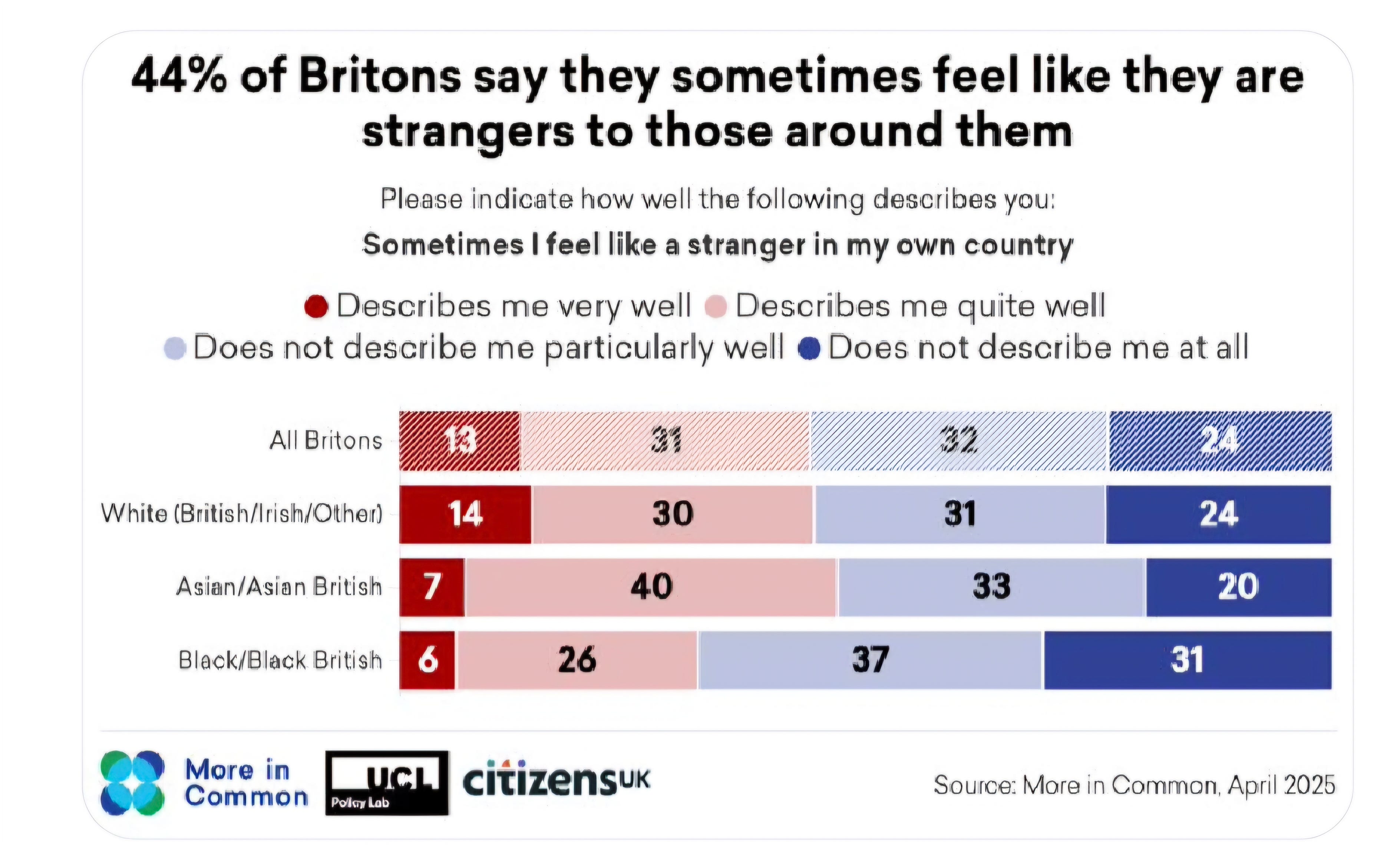
For many people in the UK, the old status quo simply no longer works. They are struggling with high house prices, food inflation, and eye-watering fuel bills. But there’s more to it than this. As an earlier More in Common survey showed, 44 per cent of Britons say they sometimes feel like a stranger in their own country.
Uncontrolled migration has not only put pressure on housing and health services, but it has also caused rapid social change. In some towns, people are left feeling alienated from their neighbours and struggling to recognise their local community. Expressions of patriotism, whether that’s flying the national flag or celebrating British culture in schools, are condemned. The one time Starmer spoke to this concern, and acknowledged Britain risked becoming ‘an island of strangers’, he quickly backtracked.
The More in Common polling on voting intentions provides a clue as to why. In what seems to be a first, their survey breaks down voting intentions by the type of school people attended. Reform’s lead among the general public is reflected among those who attended state schools. It is even slightly higher (34 per cent) among those who attended selective state (grammar) schools. Labour’s vote share falls to its lowest proportion (only 14 per cent) among this cohort.
The only group more likely to back Labour than any other party is those who attended private, fee-paying schools. An astonishing 38 per cent of former private school pupils say they would vote Labour if an election were called tomorrow, compared to 25 per cent who would back Reform and only 17 per cent would vote for the Conservative Party. This is in almost complete contrast to the views of the majority of the population.
Typically, only around 7 per cent of British children attend private schools. They are more likely to come from wealthy, upper-middle-class, or upper-class families. In turn, they are likely to go on to top universities and enter well-paid, professional careers.
So here we have proof: Labour is the party of the posh. It’s the party of Hampstead rather than Hartlepool.
This means that Labour’s core voters live in a way that is qualitatively different to the rest of society. They are less likely to be impacted by high house prices and fuel costs. They are unlikely to live in streets where houses have been given over to multiple occupancy by young male asylum-seekers.
Labour’s posh voters can afford to peddle luxury beliefs. Insane Net Zero policies that make industry unsustainable and put people out of work are of little consequence to the already wealthy. Migration is great if it provides you with a ready source of cheap labour, foreign food, and fashionable diversity - and your children do not go to schools within walking distance of migrant hotels.
For young privately-educated adults, perhaps still struggling to find work or housing, supporting transgender rights, arguing against deporting foreign criminals, or bringing traffic to a standstill in order to Just Stop Oil, enables them to signal their class credentials. They can publicly align themselves with a like-minded tribe, a class of people who will never have to suffer the consequences of their own principles.
Meanwhile, the vast majority of the population has found that despite voting for change in election after election, their voices have been repeatedly ignored. Immigration only ever seems to rise while those who complain about new impositions - such as the presence of men in women’s single-sex spaces - can find the police knocking at their door. No wonder people are angry.
Reform’s likely success in the next general election will represent far more than a political earthquake, shaking up the traditional two-party hegemony. It will be an opportunity for the political class to reconnect with the majority of the populace. We urgently need the views and experiences of the 93 per cent of the population that did not attend private schools to be represented in Westminster.
Mention of Hampstead reminds me of Peter Simple of at least thirty years ago. In his regular Daily Telegraph column, he often referred to 'the Hampstead Thinkers'. And the very left-wing (for the time) Labour leader and Prime Minister, Michael Foot, who had dodgy dealings with the Russians, lived on Hampstead Heath. They have been at it for a long time.